
01LIVE
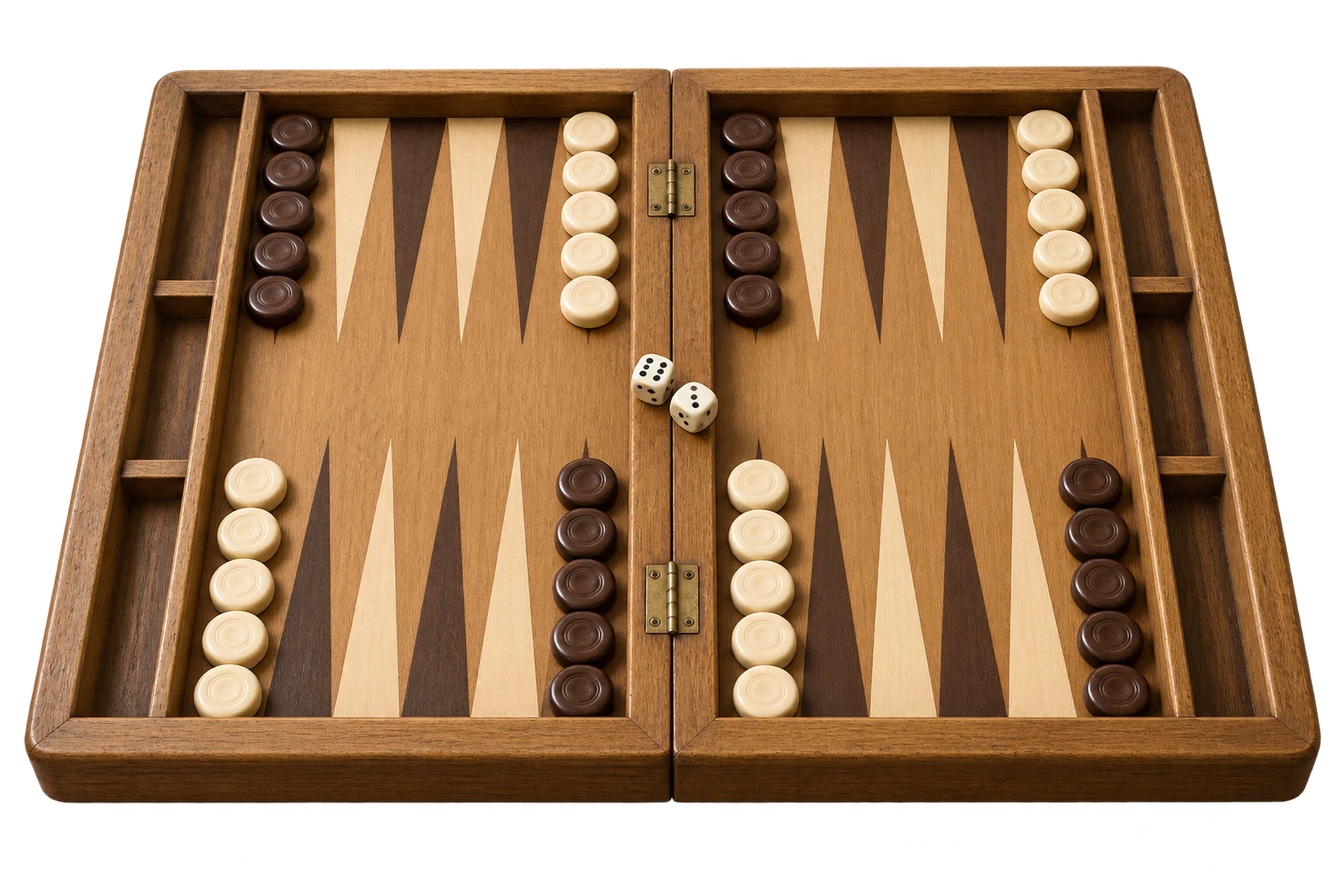
Play online
Enter matchmaking and face a real opponent in a head-to-head race.
Find a matchTHE CLASSIC RACE · REIMAGINED ONLINE
Race all fifteen checkers home, read the position, and turn the dice into a plan. Find an opponent or start against the computer in seconds.
ONE BOARD · FOUR WAYS IN
Choose the match that fits the moment. The board, dice, doubling cube, and complete backgammon rules are already set.
Enter matchmaking and face a real opponent in a head-to-head race.
Find a match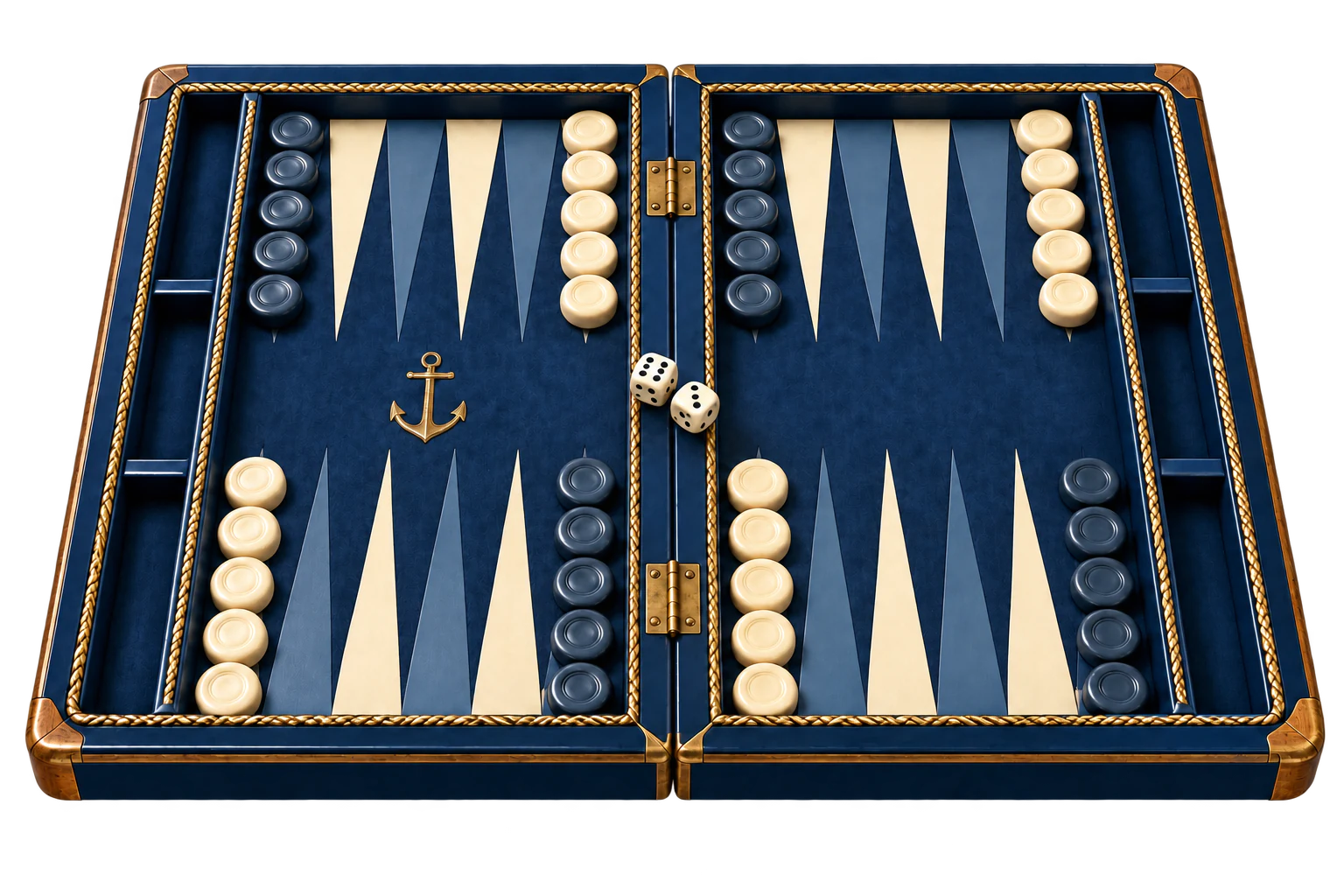
Create a private game and invite someone you know to the other side of the board.
Start a private game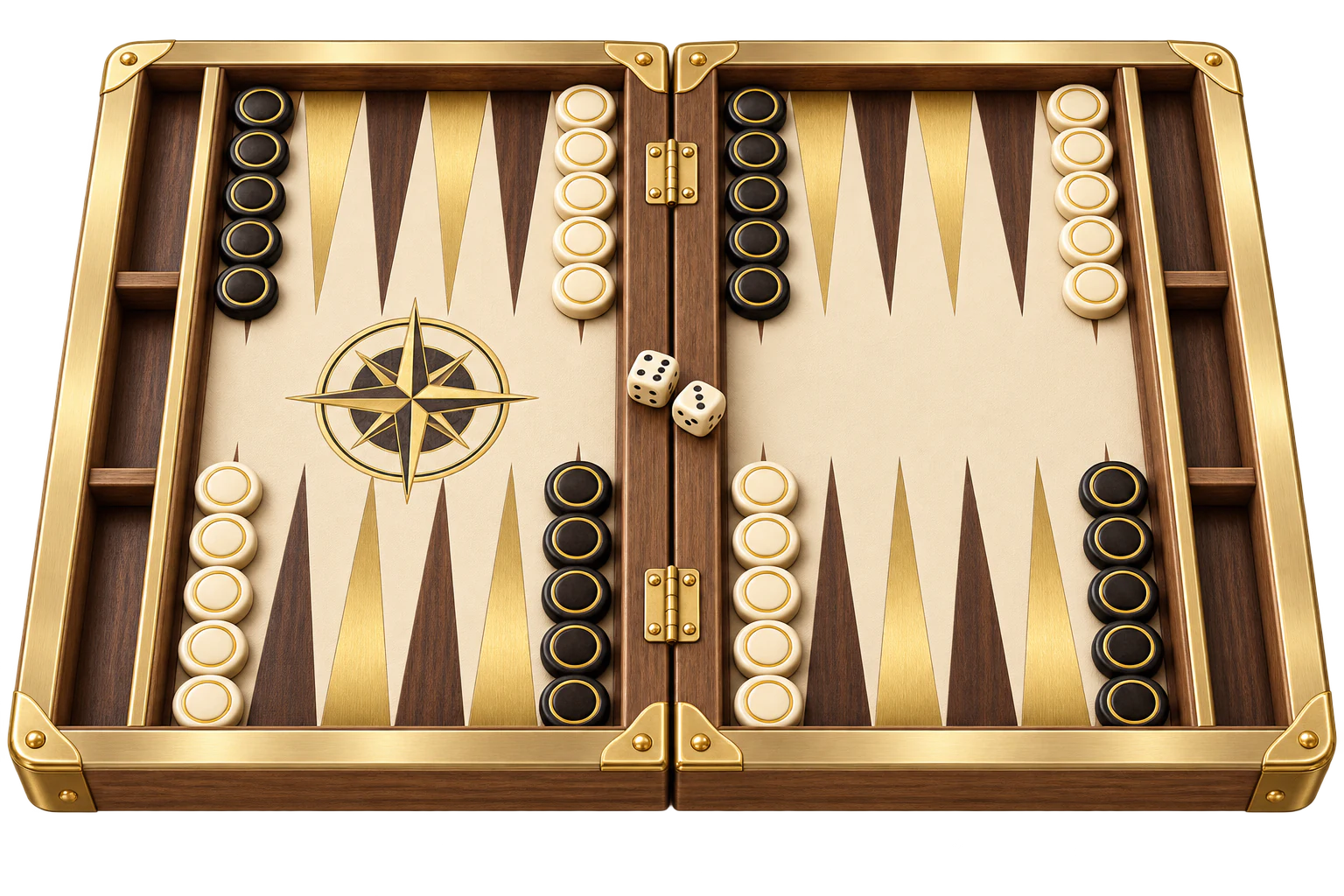
Sharpen your running game, practise hits, and learn when the cube changes the decision.
Play Computer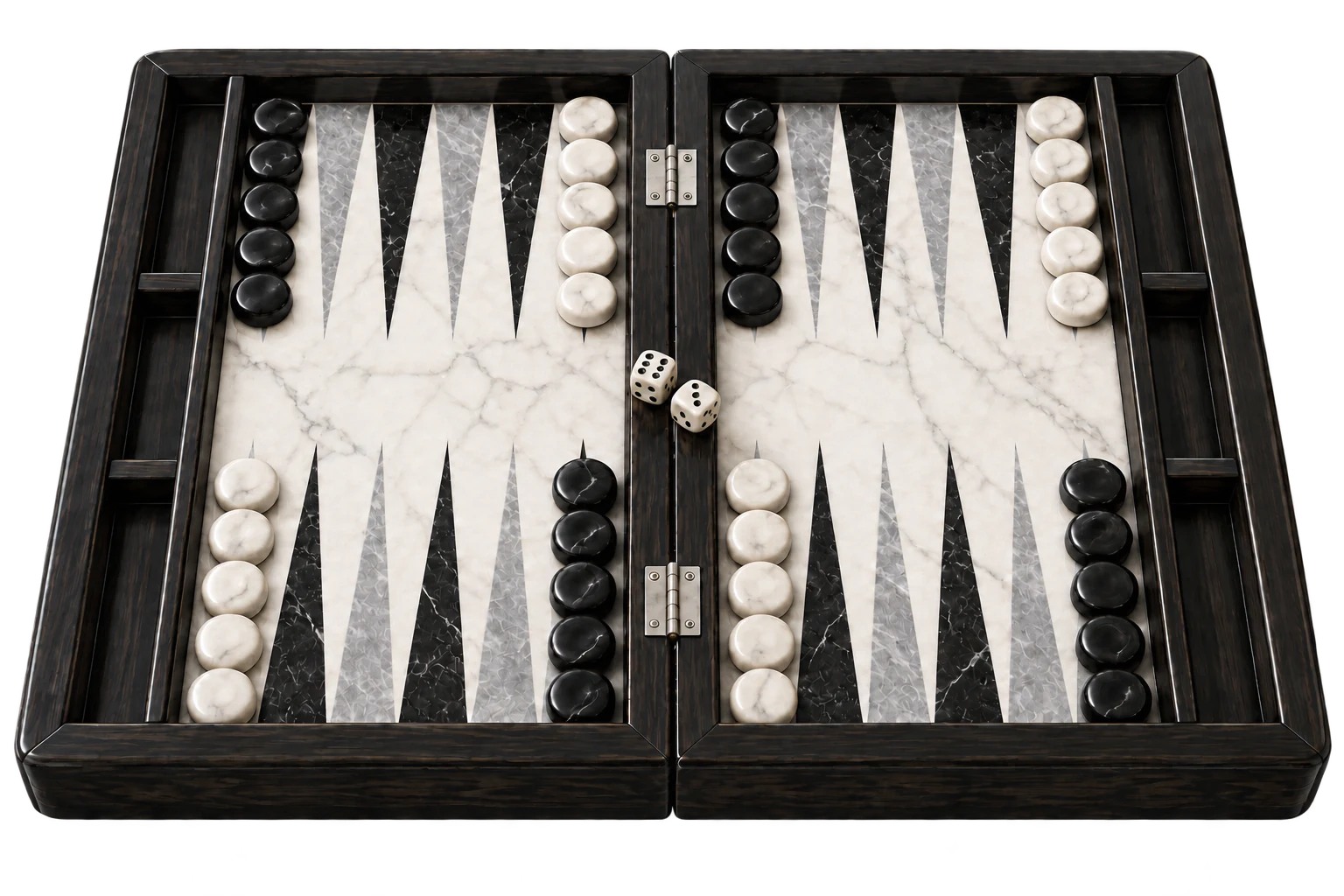
Pass the screen across the table and play together wherever you are.
Play pass-and-playTHE RHYTHM OF THE GAME
Backgammon is a race shaped by contact. The dice set the possibilities; your decisions set the position.
Open the boardUse both values when legal. Roll doubles and you play the number four times.
Make points, hit exposed blots, escape anchors, and keep every checker moving home.
Bring all fifteen checkers into your home board, then remove them before your opponent.
BACKGAMMON RULES AT A GLANCE
Two players, fifteen checkers each, twenty-four points, and one simple objective: move every checker home and bear it off first.
Move your fifteen checkers around the board in opposite directions, gather them in your home board, then bear them off.
Each die is a separate move. Use both numbers when legal; doubles give four moves of the same number.
You may land on an open point, your own checker, or your own made point—but never on two or more opposing checkers.
Land on an opposing blot to hit it. A checker on the bar must re-enter through the opponent's home board before anything else moves.
Once all your checkers reach your home board, use exact or permitted higher rolls to remove them. First to remove all fifteen wins.
Before rolling, offer to double the game's value. Your opponent can take and own the cube—or pass and concede the current value.
BUILT AROUND THE BOARD
Readable points, checkers, dice, bar, bear-off tray, and cube keep the position in focus.
The doubling cube turns timing and confidence into part of every serious decision.
Fast races, holding games, blitzes, and back games make every position feel different.
Rules included Hits, the bar, forced re-entry, doubles, gammons, backgammons, and cube ownership.
FROM ROLLS TO DECISIONS
The dice tell you what is possible, not what is best. Good backgammon balances racing, blocking, contact, and risk on every turn.
Pip count measures how far your checkers still need to travel. When contact ends, the lower total usually leads the race.
Adjacent made points form a prime that can trap opposing checkers while giving your own pieces safe landing places.
A blot can be a calculated risk, a useful tempo, or an invitation to be hit. Judge it by the return shots and the position it creates.
A strong double gives your opponent a difficult choice before your advantage becomes too obvious to take.
A GAME ACROSS MILLENNIA
Backgammon does not come from one fully documented invention. It belongs to an ancient family of race games that travelled, changed names, and gathered new rules across the Near East and Europe.
What endured is the central tension: chance creates the move, and judgment gives it meaning.
Boards found in the ancient Near East already used race-game ideas and layouts with groups of twelve spaces. They show the deep heritage around the game, not a single proven line of descent.
Backgammon-like nard is attested in Iran by the late Sasanian period, where board games became part of courtly culture and literature.
Games known collectively as tables spread widely across medieval Europe. Surviving boards and carved tablemen reveal a familiar two-sided contest with fifteen pieces per player.
The English name “backgammon” appeared in print, and written descriptions helped establish rules recognisably close to the modern game.
Doubling emerged in New York gaming clubs. The cube added a new strategic question: not only how to move, but when the position is valuable enough to double.
Tournament players, clubs, friends, and online opponents still share the same twenty-four points, fifteen checkers, and endlessly changing race.
GOOD TO KNOW
New to the game or returning after a while? Start with the essentials.
Yes. Backgammon Rocks launches directly in a modern browser, so there is nothing to install before your first game.
Yes. Choose the private friend mode for an online invitation, or use pass-and-play when you share one device.
Yes. Computer mode is ready when you want to practise without waiting for another player.
Yes. The full match flow includes double offers, takes and passes, cube ownership, gammons, and backgammons.
Move all fifteen checkers into your home board and bear them off before your opponent. A gammon or backgammon can increase the result.
You must use both numbers when both can be played legally. If only one number can be played, you must use the higher one when either number is available.
A double gives you four moves of that number. For example, double fours let you play four separate moves of four points whenever they are legal.
A single checker on a point is a blot. An opposing checker can hit it and send it to the bar; that checker must re-enter before any other checker can move.
You may start bearing off only after all fifteen of your checkers are in your home board. If one is hit, you must bring it back home before bearing off again.
A gammon is won before the loser bears off any checker and is worth twice a single game. A backgammon is worth three times when the loser also has a checker on the bar or in the winner's home board.
Both matter. Dice create uncertainty, while checker play, risk management, pip counting, and cube decisions reward skill over repeated games.
Yes. The board is designed for modern phone, tablet, and desktop browsers, so you can continue playing on the screen that suits you.
THE BOARD IS OPEN
Choose your opponent and begin a new match.
Play backgammon now